
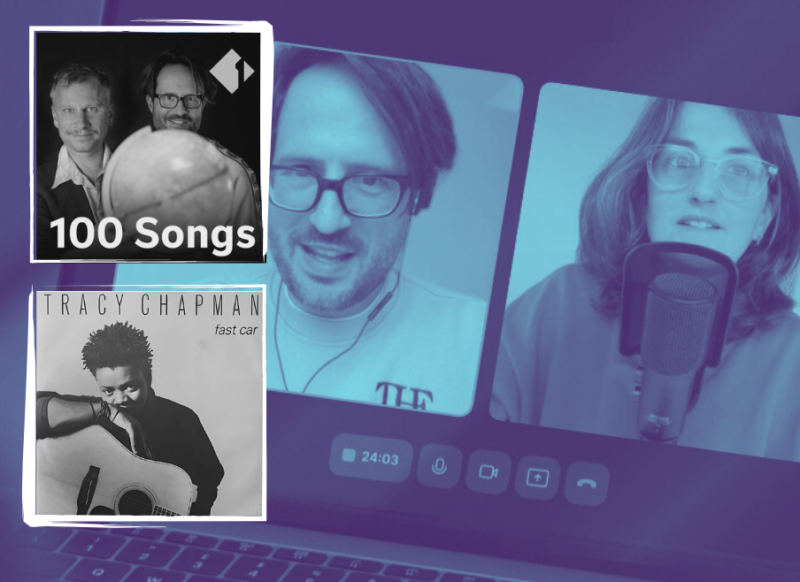
I had the pleasure of being interviewed by Stefan Niederwieser from Ö1, an Austrian public radio station that reaches 750,000 listeners daily. The program, called “100 Songs,” covers socially significant songs from around the world. The series, of course, covered “Fast Car” by Tracy Chapman, and the episode aired yesterday, November 12, 2025.
You can listen to the episode on oe1.orf.at or on YouTube below:
I assume that most of you won’t be able to listen to the show because it’s in German. However, the parts of the show where the interviewees (me and Professor Francesca Royster) speak English are first broadcast in English and then translated into German.
Since only parts of our interview were included in the final broadcast, I thought it would be nice to share the full transcript with you. Enjoy reading it, and enjoy listening to the show if you speak German!
Interview Transcript
Stefan Niederwieser: What attracted you to Tracy Chapman? And I think you’re doing this website. What brought you in contact with Tracy Chapman and her music?
Aurélie Moulin: Well, I was only ten when she burst onto the scene in 1988. ‘Talkin’ Bout Revolution’ was a huge hit in France. I loved the song, but I didn’t understand it because I was only 10. I didn’t really understand what it was about. But I loved her voice. Then, three years later, I had an English teacher who made us study the lyrics of “Talkin’ bout Revolution,” and that’s when everything started for me, because it literally changed my life. Tracy was talking about my life, and it started with “Talkin’ bout Revolution” and then “Fast Car” and the other songs. From the moment I understood what she was talking about in her songs, I changed my behavior completely. I studied hard at school, and it changed my life. That’s how it started for me, all thanks to an English teacher. I would thank her forever for this.
Stefan: We had a French teacher, and he made us study MC Solaar, but I didn’t start a fan site. There must have been something that attracted you to her, right? What was it, if you can put it into words?
Aurélie: (Laugh) Well, it was her voice, her lyrics. She was popular, but she didn’t give interviews, at least in France. So, I didn’t know anything about her. I would just study her lyrics, and everything would be clear to me: what to think, what books to read, and so on.
She was like a mentor to me. She taught me a lot. I started this website, about-tracy-chapman.net, because I wanted her to be more well-known. She’s already well-known and popular, but there was nothing about her online, and that was on purpose because she didn’t want anything about her online. I published the website in 2001.
I wanted to gather all the archives, interviews, and videos that I could find online. That’s how it started. I started with the website in 2001, and later, social media came along. I launched social media accounts, and Stefan Evans, who managed the Tracy Chapman online community with me, launched communities on his side as well. We brought those communities together to create what you see today (Facebook, Instagram, YouTube, X, Threads, Bluesky). We have huge accounts, and they are the only ones because she doesn’t have any official ones. She doesn’t want to be on social media. But it’s useful for communicating when something is happening: a release of a Greatest Hits album, for example, or the re-release of the debut album on vinyl this year. The record company, with Tracy’s help, relies on us to promote these releases. It’s great.
Stefan: How did the fan base develop over the years? I guess I don’t know exactly when you started, but there was a popular cover of “Fast Car” in 2016, and obviously, there’s been a lot of growth since 2023. How did that happen?
Aurélie: Well, it really started to become popular with the release of her last album, Our Bright Future, in 2008, but that was also the beginning of social media. That’s how it first started.
Then, little by little, we started getting thousands of followers. The last huge increase in followers was on Instagramafter the performance at the Grammys last year. However, our Facebook following, which is at 1.8 million, didn’t increase much. It was mainly a steady increase.
The problem is that we don’t have much news to publish because she isn’t performing anywhere, so there’s no news, and it’s difficult. We could publish an archive every day, but I’m not comfortable doing it, especially since she’s not really for it. It’s complicated. We want to keep her memory alive. We want people to remember her, but she doesn’t want to be in the spotlight. We want to be honest and respect her wishes, but we also want to express how much we love her. We have to find the right balance.
Stefan: So, let’s talk about her first big appearance. Why was Tracy Chapman chosen to perform at the Nelson Mandela birthday concert at Wembley Stadium? I realized that some musical players were involved, like a manager and a publishing company. She wasn’t a total unknown, but maybe the least known. What happened when Tracy first entered the stage, and when she entered it a second time?
Aurélie: Thanks to her manager, Elliot Roberts, she was at the Nelson Mandela Birthday Tribute concert at Wembley. At the time, he was the manager of Bob Dylan and Neil Young. Roberts also managed Joni Mitchell. He suggested to the organizer of the concert, Tony Hollingsworth, that Tracy participate in the concert.
It’s funny because she said in interviews that she doesn’t remember being invited. We know why, but she wouldn’t know. I will send her the reasons why she was invited once I find out the answer.
She was there, but she wasn’t sure if she would perform. Obviously, who better than her could sing and embody revolution and justice? Her songs would speak for themselves and be highly relevant to the event. But most of all, she was there to perform alone on stage with just her guitar. She would be the perfect performer to fill a spot in case of any problems or if they needed time to set up the stage, so they could invite her to play in between major sets. So it was her. She was there to fill the spots.
This was her first time being invited to perform. She sang three songs. The concert had started at two o’clock, so it was just one hour in. She performed “Why?”, “Behind the Wall,” and “Talkin’ Bout a Revolution.” At first, she was unknown to most of the audience. They wouldn’t listen to her; they kept talking and singing. There was also some noise on the main stage because she was performing on a secondary stage. As she performed, however, the audience gradually became silent. The second song she sang was an a cappella song. In a huge stadium filled with a huge audience, there was silence right away during “Behind the Wall.” So it was just her and her voice for this song, not her guitar. Then, after she sang “Talkin’ Bout a Revolution.”
It’s interesting that a relatively unknown solo performer sang three songs when there were more popular performers on that stage that day who only sang one. She played three songs, and then, two hours later, there was a problem with Stevie Wonder’s equipment, so she was called back on stage. That’s when she sang “Fast Car” and “Across the Lines.”
I’m sure that if she hadn’t come back on stage a second time, it would have been as huge. After all, she sang “Talkin’ Bout a Revolution” the first time. The record company chose this performance as the official music video for the single. There is no official music video other than this live performance of “Talkin’ Bout a Revolution.” That would have been enough, but then she sang “Fast Car.” So we’ll never know for sure. She burst onto the scene and became a superstar in just a few minutes, seconds. There were roughly 72,000 people in the audience and six million people watching on TV around the world. She said that she would never have had this huge audience even if she toured for ten years or two decades. She went from unknown to superstar in just one afternoon.
Stefan: So why did the Tories try to sue the BBC? Why was the celebration of Mandela’s birthday so significant? And why did many regimes consider him a terrorist?
Aurélie: It’s because Mandela was labeled a terrorist, and because of Cold War politics, anti-communist sentiment, and the economic interests tied to apartheid South Africa, that it was a huge problem. He was considered a terrorist by some, but Tony Hollingsworth was clever in that the purpose of the concert was to portray Mandela as a freedom fighter and a respected black leader, not a terrorist. He introduced the broadcasters to the event as a birthday tribute, not a political concert. That’s how he convinced them to sign the contract to broadcast the 11-hour concert. The Tories wanted to sue the BBC because, as a national TV station, the BBC had to be apolitical. They shouldn’t have to broadcast political events like this one. However, since it was a musical tribute for someone’s birthday, it could have been for anyone. So, legally, they could not do anything. That was the clever approach.
Stefan: What is “Fast Car” even about? There are a lot of topics in there, right?
Aurélie: Yeah, well, for me, it’s just the story of a girl who becomes a woman and wants a better life. That’s it. It just so happens to take place in the northeastern United States, but ultimately, the song inspired people worldwide. It could happen anywhere, and it changed my life as a French teenager in the ‘90s. No matter the setting, what matters is the story itself. It’s about someone who is living somewhere she doesn’t want to stay. She wants a ticket to anywhere, a better life, and not a life of luxury. In the story, she just wants a house in the suburbs, a regular job, and kids. She just wants a regular life. That’s why it’s a social song. I would say a song à la Bob Dylan or Bruce Springsteen. She tells a story. She doesn’t make any political statements. It’s just a story, and we can identify with the characters. I think that’s why it resonates with so many people from all walks of life. I’ve read many testimonies from people saying it changed their lives. It’s amazing.
Stefan: So, yeah, what are people reading into this? I mean, this is a time of deindustrialization, and she’s from Ohio, a heavily deindustrialized area where large rubber and steel factories are closing down. A lot of people there have the same feeling: that they have to get out of there.
Aurélie: Yes, but you know, I’m from the countryside. I wanted to leave because I was surrounded by farmers and cows, and I didn’t want to stay. The scenery wasn’t urban, but it spoke to me. It was a place full of rednecks at the time. The funny thing is that, 30 years later, I moved back here. I wanted to leave because there was nothing here, and there was no future. I made my life, and now I’m back. Today, I’m back, and I love it here. I can live here knowing everything I’ve experienced. It’s funny.
It shows that if you’re not happy somewhere, you can go anywhere. The song’s image is a fast car, and the story initially implies a partner, but you can live alone. You’re not stuck anywhere; you just have to want to go. That’s the message the song gives you. Remind yourself that you’re not stuck; you’re free to live, and you can do it if you want to. That’s what the song says! It would talk to anyone: women, men, Australians, Africans, Americans, French people, anyone!
Stefan: I just had one thought. Was “Fast Car” popular everywhere, or just in some places? It’s sometimes hard to find charts, especially from the late ‘80s, because some countries didn’t document them. Do you know anything about that? Was it hugely popular all over the world?
Aurélie: Actually, no, it wasn’t released as a single in France, so it wasn’t well-known, the hit was “Talkin’ Bout Revolution.” But in those days, we would love a song and buy the album, so people would know “Fast Car,” but it wasn’t a hit. It didn’t chart at all in France or many other European countries.
Still, this song is really well-known among French people, and at concerts, people sing along with her when she performs it, even though it wasn’t a hit nor a single. We don’t hear it on the radio or see it on TV here. Still, it’s a well-known song, also because the album begins with “Talkin’ Bout a Revolution”; it’s the first track. The second track is “Fast Car,” so there are two strong tracks at the beginning of the album. All the hits (”Talkin’ Bout a Revolution,” “Fast Car,” and “Baby, Can I Hold You”) are on the A-side of the album. The song is so strong that it’s memorable. Maybe it’s also the melody. I don’t know. There’s something magical about it for sure.
Stefan: I think the chorus doesn’t come instantly either. At one point, you almost feel stuck in the verses, like you’re stuck somewhere in the world. Then, the chorus comes and lifts you out of your misery, wherever you are.
Aurélie: Yes, it takes a while to get there. I don’t know how many minutes into the song the chorus starts, but I know it’s very long and unusual. They had some problems at first. The record company wanted to cut some verses because radio stations would think the song was too long. They wanted the chorus to come quickly, but she said no, no, no. The chorus comes whenever it has to. So, yeah, they shortened some of the music, but not the lyrics, for the radio version.
Stefan: So, one more question about the lyrics, or maybe how the song is constructed. Does she really get out of there? There are some hints that suggest she has to stay because her father is sick. Isn’t that right?
Aurélie: It’s funny you should mention that because I regularly ask people that question on our social media. I ask them if it’s a happy or sad song. Half of them would say it’s a happy song. The other half would say it’s a sad song.
I also ask this question at the end of the song: Does she leave her partner, or does she stay with her partner? Again, almost 50% say she leaves, and the other half say she stays.
I think we want to understand what we want her to do and what we would do if we were in her place. We just let the character do what we would do if we were in her shoes. It’s really weird. I think it’s a happy song, and lots of people say they cry when they listen to “Fast Car”. “But why are you crying? It’s very positive.” “No, it’s very sad!”. So it depends on how you want to hear it.
Stefan: So it could almost be like an icebreaker in a conversation or to get somebody to know better what you think of this car. It’s like a half glass, half full, half empty thing.
Aurélie: Yes, I keep reading the lyrics, trying to understand why people would think this. I think it’s just a brain thing. The way you read what she says in it, it’s very clever. I don’t think she did it on purpose, but that’s what’s happening with this song.
Stefan: Do you think knowing about Tracy Chapman’s upbringing and youth in Ohio sheds some light on this song?
Aurélie: I think she couldn’t have written this song without the life she had. She said once that the song was inspired by her parents’ story. It’s the story of a couple, and that couple happens to be her parents. From that, you could say it’s partly autobiographical.
What we should know about Tracy is that she comes from a very poor family, and the song talks about poverty. She was really aware as a child of the harsh world she was living in, and of how her mother became a single parent when her father left them when she was four. Her mother had to do whatever it took to feed her kids, help them study, and give them the easiest life possible.
I think this part of her childhood is why we have such an authentic song, and why we can feel her fear and her desire to leave. She left Cleveland, Ohio in dramatic circumstances. She suffered a racial attack when she was 15. She had to leave to study at a boarding school in Connecticut. She left when she was 15. All she wanted was to leave, but her mother didn’t want her to because she thought she was too young. But when this incident happened, her mother said, “OK, you can leave if you want.” You can have your chance somewhere else.” And that’s what happened.
I think that if she hadn’t lived through all those experiences, she might never have been able to write these songs with such authenticity. We can feel her authenticity, and it’s relevant. We can trust her because she was as poor as she sings about in those songs when she wrote those songs. She wrote them when she was unknown. No one would have thought that the debut album’s first songs would make her that popular and successful. She wrote the song “Talkin’bout Revolution” when she was 16!
Stefan: And she allegedly wrote most of this song in one night, right?
Aurélie: Yes, “Fast Car” was actually the last song she wrote for the album. She had already signed a contract with Elektra Records when she wrote it. So, when they signed her, she hadn’t even written “Fast Car.” She wrote it in just a few hours one night, and she said that she edited a few words later on. It was just a matter of inspiration. She was alone with her dog in the middle of the night when the first words came to her. Then, she followed the line and wrote the song.
I’ve read many interviews and watched many videos about how artists, singers, and bands write songs. The other day, I watched a documentary about Coldplay. Chris Martin talked about how he wrote the song “Yellow.” He wrote it quickly in one shot, and it became one of their biggest hits. “Fast Car” happened the same way. Inspiration can come from anywhere.
Stefan: Yeah, the story keeps repeating, but sometimes you have to be cautious about it. I don’t know if you know the song “Sailing” by Christopher Cross. It’s an amazing song, and there’s a great video where he talks to Rick Beato about how it was booed at some point in his life. He thought about his father, who was an oppressive figure. Yeah, so, there are other songs like “Paranoid Android” by Radiohead, and it almost broke the band.
So talking about Tracy Chapman and how she fit into the 80s, when we think about the 80s it’s always very thinned, very artificial. We think of thin pop as being superficial and embodying a neo-conservative spirit. At the same time, they are among the world’s largest charity events. Tracy Chapman is touring with Sting, Springsteen, Peter Gabriel and others, so she kind of fits in, but not really.
Aurélie: Yes, well, I think it’s particular to her, but I think it was the same in the ‘70s. In the ‘60s and ‘70s, you had Dylan, Baez, and Mitchell. They all had a voice and stood for causes. And there was also a lot of popular music at that time. I think the difference with the ‘80s was that it was probably one of the decades in which the music industry made the most money. The stars were superstars and had a platform. Lots of those artists were huge. We could add David Bowie, Paul McCartney, and Michael Jackson, for example. They stood for causes and raised money for them. They supported those causes because they could.
There was also the rise of MTV, which amplified those messages through music videos. So, the ‘80s were very particular. I think the only difference is that we had TV and radio, which we didn’t have before. I guess we never had that again after that. By ‘95, it was all over. So, yeah, it didn’t last long, but we had Sting, Springsteen, Bono, McCartney, and George Michael. They were really popular, and some of them would make hits about nothing serious. But they also took part in those projects, concerts, and songs. I don’t know. We had songs like “USA for Africa”, which Michael Jackson co-wrote. What else do we have? “Do they know it’s Christmas” in the UK? It was really special. It’s special to the ‘80s.
Tracy would fit because she sings about social and political issues. What’s strange about Tracy is that every album she released had social and political songs as well as love songs. Besides “Fast Car” and “Talkin’ ‘Bout a Revolution,” her two other big hits were “Baby Can I Hold You” and “Give Me One Reason,” which are love songs. She had lots of love songs as well. Yet, she’s best known as a protest singer and activist. She doesn’t like it when people call her that. She says she’s not a protest singer or an activist; she says she’s just a singer-songwriter.
Stefan: Sometimes, you read about an album and how many copies it sold. For example, I read somewhere that a debut album sold 10 million copies worldwide. Do you know anything about that?
Aurélie: Yes, it’s funny that we don’t really know. I guess only the record company and her know the exact figures. Yesterday, I read on ChartsMaster, one of those websites that compiles data, that she sold 47.3 million records worldwide. Her debut album would be the best-selling record. The reason we don’t know is that, in 1989, just one year after the album’s release, she had sold 10 million copies. But 30 years later, it’s about 22 to 25 million records. She sold a lot the first year, but she also sold a lot of the same album for three decades.
Honestly, I don’t know exactly how many records she sold, but one thing is certain, her Debut Album was the best-selling album of the year 1988. But exactly how many? I don’t know.
Stefan: I have a better feeling about what the number is and what we’re around. So, how did she get used to this kind of success?
Aurélie: Well, she wanted to stop everything many times because she doesn’t like success or fame, and the music industry is very special. She signed a contract for eight albums, delivered them all, and then it’s been a long time since we’ve heard from her. She delivered eight albums in 20 years, and since her contract ended, she took time to breathe and leave.
It wasn’t easy for her. You never saw her in any tabloid, and she did whatever she wanted. She gave lots of interviews, well not as many, I collect them, I know I have hundreds, but you don’t see them anywhere. You don’t see her anywhere either.
It’s very hard to reach her. We’ll probably talk about Luke Combs’s “Fast Car” cover from two years ago. It was difficult for them to reach her, get a comment from her about his cover, and convince her to perform the duet with him at the Grammys. She’s very far away from the industry and the public eye, and everyone respects that. She’s… I don’t know if the word “mysterious” is right, but she’s kind of like the artist Sade. You don’t know anything about Sade. She’s popular, but no one knows where she is, what she does, or what she thinks. We don’t know, except when she gives interviews. She’s really discreet. What’s great is that the industry respects that. She didn’t give them a choice anyway; she wants to do things her way, and that’s what’s beautiful about her. She knows what she wants. And that’s it.
She recounted the story of the photo shoot for the cover of her first album. The record company wanted her to wear leggings. She said, “I don’t wear leggings. It’s not who I am. I just wear the clothes I usually wear every day.” I think it’s difficult for a record company to work with an artist like her, but that’s also the beauty of it. She would approve anything done because she gave her consent to anything published or happening. If she doesn’t agree, then you have the Nicki Minaj story. You have to do things her way. As she sang in “Crossroads” and “All That You Have Is Your Soul,” “All that you have is your soul.” She never sold her soul for fame, money, or anything else, and that’s one of the things I love most about her.
Stefan: This makes it unique because some artists don’t give interviews. They want to control the attention they get, and they know that if they speak too early, they won’t get it. They’re kind of calculating with the attention they get. In Tracy Chapman’s case, though, it’s almost like she doesn’t exist on that level. You can’t tell her, “You have to give a good interview to Rolling Stone so the magazine will publish another cover story.” She just does interviews her own way.
Aurélie: Yes, well she does a little, but if she could, she wouldn’t do anything. However, she has to say yes at some point. That’s why we had ten interviews for the re-release of the vinyl debut album this year. Yes, we are counting them because it’s so rare: ten interviews. For the release of the greatest hits 10 years ago, we also had a bunch of interviews. She always chooses who she gives interviews to. It’s not just anyone who gets a Tracy Chapman interview. It’s always about quality, not quantity.
I’m always astonished by how she can stay true to herself all these years later. When I read her early interviews, she was just 18, so it was in 1982. Everything she said in that interview is still true today. She’s stayed the same person, even with everything that’s happened to her. It’s really rare to be that mature at such a young age, and to still be the same great artist today, knowing what you want and saying, “No, that’s not me. I don’t want to do it.”
Stefan: So, what was the life of the song “Fast Car” from the early 2000s until 2023?
Aurélie: “Fast Car” is Tracy’s most popular song today. At the time, however, it wasn’t the most popular song for a long time. Globally, “Give Me One Reason” sold more single units in the US than “Fast Car”. Over the years, however, “Fast Car” became the most famous song. In January of this year, it surpassed one billion streams on Spotify, so it’s huge. I just looked at the data yesterday, and since January, it’s received an additional 126 million streams, so it’s a huge song in terms of streaming. That’s why people would say she’s a one-hit wonder. That’s not true, but lots of people, mostly in the US, only know Tracy Chapman for this song. In Europe, that’s not the case.
“Fast Car” is also her most covered song. Many people have covered it, including Justin Bieber, Khalid, Sam Smith, Jon Bon Jovi… A few years ago, Jonas Blue and Dakota released a cover that I found really unique and kinda weird i must admit. This cover has received 670 million views on YouTube. It has more views than Tracy’s official music video.
So yeah, a very well known song, very famous song covered by lots of artists. And lots of people saying that this song changed their lives. Lots of artists also say that this song inspired them: Tori Amos, Cyndi Lauper, Annie Lennox… So, it has always been that song and it would rank into the top 500 most important songs by the Rolling Stone magazine as well. It’s a reference, a classic.
But then, two years ago, the country music artist Luke Combs recorded a cover of “Fast Car” for his fourth album, Getting Old, released in 2023. The cover was released as a single and became a huge hit.
There was controversy when he released the song because he’s a white male country singer who covered a song written by a Black woman. There was an issue because of the black-and-white aspect of it. This is an important American issue, of course. When they performed the duet at the Grammys, lots of Americans said it represented the real image of the US, it showed how people could be united. However, that’s not how I or most Europeans saw it. But the way people see things in the US is quite different.
When Combs covered the song, one positive thing happened: it became a huge hit, received a lot of streams, and introduced a new generation to “Fast Car”. I read lots of social media posts by people saying their children asked them, “How do you know this song by Luke Combs?”. They would answer: “Well, it wasn’t written by Luke Combs; it was written by Tracy Chapman in the ‘80s.” So, there’s controversy over who wrote “Fast Car.” If you search for “Fast Car” on Google, it will say it’s a song by Luke Combs.
The Washington Post published an article that went viral. In the end, the song won two Country Music Awards (CMA) in 2003. Tracy won her first Country Music Awards for the song, and Luke Combs won another for the single, making them both winners that night.
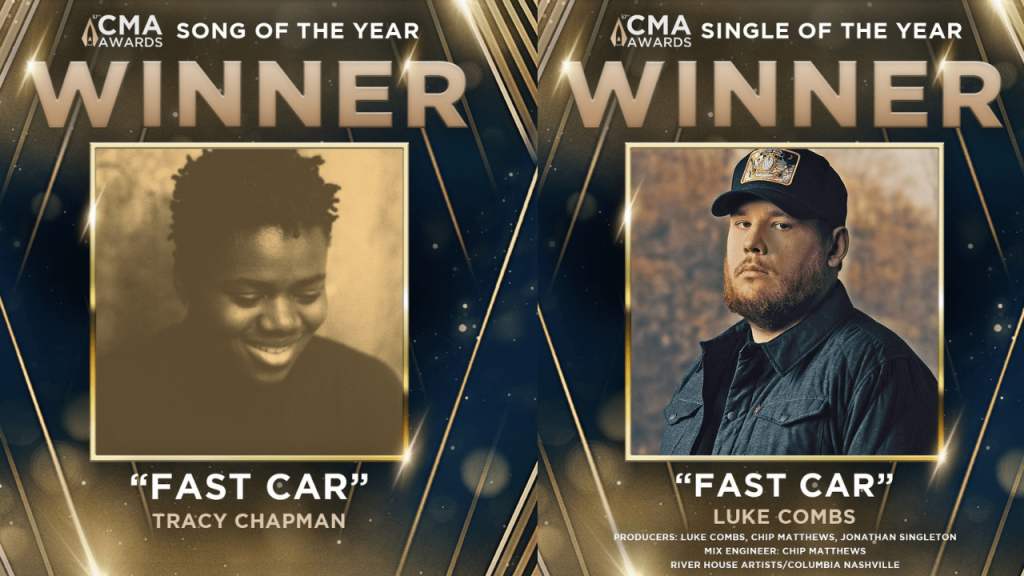
However, again, there was controversy because people said that Tracy could only win a Country Music Award if a white guy sang her song. But she’s not a country singer! She doesn’t write country music! It just so happened that it was a country cover, a country version of the song. Well, it received a lot of publicity. In the end, it’s a shame that so many controversies were unnecessary.
What’s magical is that they reached Tracy and asked her to perform a duet with Luke Combs at the Grammys. I can’t describe what it meant to me. In 10, 20, or 30 years, I guess we’ll talk about this performance as much as we talk about her performance at the Nelson Mandela concert. It was such a moving moment.
When she sang that song with Luke Combs, it was so special because it had been such a long time since we’d seen her on TV. Even if she was performing an old song, it’s this song that everyone talks about. It was magical to see her acknowledge that she agreed with this version by singing it live with him. He was sweet, too, watching her sing. He looked grateful to be there, and he was the one who brought her back to TV.
Rolling Stone magazine published an article about how it happened. It took many months to convince her to make this duet and appear on TV, and I really loved this article. I think it’s the first time we’ve had so many details about what happens behind the scenes with Tracy, so I recommend reading it. We have lots of details about how we can work with her.
Stefan: Yeah, I’ve watched that performance a lot, and I think what’s great about it is that people were expecting Luke Combs to be disrespectful. Maybe some people expected Tracy Chapman to be more confrontational. I don’t know. It was like this was something all people could agree on in a divided nation.
Aurélie: Yes, the way they did it was so clever. She sings the first verse, and then they all answer each other. It’s beautiful and well done. She also invited the musicians who recorded the first version of the song on the album. I mean, more than 30 years later, they’re on stage with her: Denny Fongheiser is on drums and Larry Klein is on bass. They also have a musician from Luke Combs’s team. Each of them brings something special to make this performance magical.
I know they didn’t want it leaked, but I’m glad it was. It was supposed to be a surprise, but someone leaked the info, so it was published everywhere. I’m glad it was leaked because I could watch it live, and I would have missed it otherwise. Watching it live was important; I think watching it later would have been different. Tracy’s guitarist for many years, Joe Gore, said the secret was published on the first page of CNN. It was a secret that everyone would know. We knew the exact minute the song would start. It started a few minutes after the TV show began. The first image we saw was her hand on the neck of the guitar. It was so moving. Yes, I’ve watched it. I don’t know how many times.
Stefan: And you still have the feeling that the audience does, too. I mean, even if it was published on CNN, the audience was kind of like, well, at first, some people knew who she was, and then, after she began singing, a lot of people realized it. Then, people were just carried away by the moment.
Aurélie: Yes! We could hear it from the audience. I mean, it’s on TV, but we could hear the audience roaring. Then, we would see the cameras on Taylor Swift, and everyone, including Oprah Winfrey, would sing along. Tracy said that she was moved for weeks after that. It was such a special moment for her that I think it will stay in her memory for a long time. I hope it inspires her to do something new in the future.
Stefan: I mean, you’ve read a lot of commentaries on it, but would you say it’s fair that the specialty of this moment was that there was a white-bearded country singer and a shy black woman? It was almost as if we had a glimpse of how the divide may be overcome.
Aurélie: Yeah, again I think it’s an American way of saying things. She sold so many records, and lots of people know her and love her, especially for this song. It’s rare that an old song would be played on the Grammys today, especially one that she first performed on the Grammys in ‘89.
She played it perfectly, and every musician who plays with her says how professional she is and how perfectly she plays the guitar. She’s such a professional musician, and she sings like on the record. I think we can see it on her face. She almost had tears in her eyes, and she was so happy with the audience’s response when she begins singing.
We see the old and young generations talking to each other through this music. There is no fighting; there is friendship and a magical connection. I don’t know if it’s a question of color, gender, or age. It seemed like they had played together for a long time, even though they had only rehearsed for four days. It’s also because this song has been in Luke Comb’s life since he was a kid. He knows it by heart. Tracy has also played this song hundreds of times. I think the connection is genuine, and we don’t see any rivalry. They are so in sync that we can feel it, especially the respect he has for Tracy. The way he fandoms her, the way he looks at her, and the way he sings in mute mode when she sings her part is funny. He said he loved how she let him be a fan when he talked to or sang with her.