
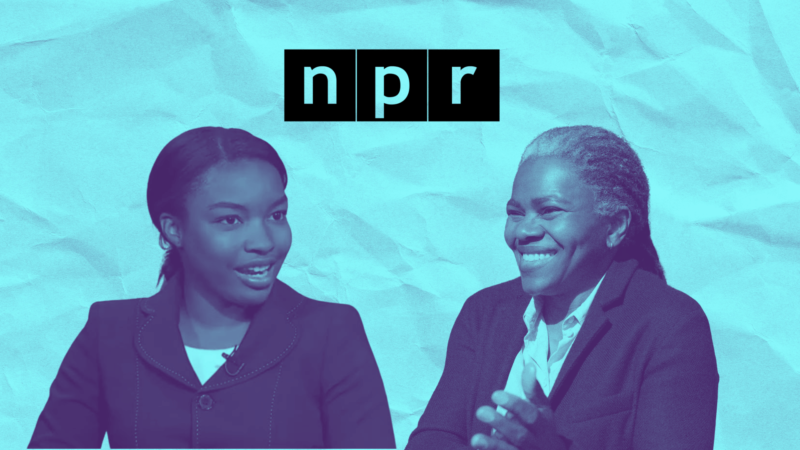
NPR’s Ayesha Rascoe talks with Tracy Chapman about standing the test of time and the re-release on vinyl of her self-titled 1988 debut album.
By Ayesha Rascoe, NPR, April 6, 2025
Summary
In this 10-minute interview with NPR’s Ayesha Rascoe, Tracy Chapman shares her thoughts on the 37th anniversary re-release of her debut album, reflecting on how it continues to resonate with listeners and shed light on pressing social challenges. With heartfelt humility, she acknowledges the impact her music has had on other artists. While addressing the label of “protest singer,” Tracy lovingly emphasizes her dedication to capturing the human spirit within social struggles. Despite today’s challenges, she remains optimistic, drawing strength from the inspiring legacies of historical figures who fought for meaningful change.
Episode’s Transcription
Ayesha Rascoe: Just a few notes of an acoustic guitar. That’s all it takes to recognize the timelessness of Tracy Chapman’s Fast Car. That single is from her first self-titled album, which was released in 1988. Now the album is getting re-released on vinyl in honor of its 35th anniversary. Even if it’s actually been 37 years since it came out. How does that work? I’ll let Chapman explain.
Tracy Chapman: The intent was to mark the 35th anniversary of the album’s release, but we ran into a few hiccups and so here it is 37 years later and we’re finally getting it out.
Ayesha Rascoe: And what is it like all these years later to see how much this album is still connecting with people and does it still connect with you in the same way?
Tracy Chapman: It absolutely still connects with me. I mean, I feel it’s as if when you’re a songwriter, your songs are your children and so you never would abandon a child and so in the same way these songs, they’re always very dear to my heart and it’s humbling to discover that all these years later people are still listening to the record and finding that there’s something there for them to connect to.
You know, at the same time, you know, it’s a little bit disheartening to know that we’re in this moment where a lot of the topics that I addressed on the record, there’s still questions, you know, that are unanswered. There’s still unsolved and unresolved issues regarding race and safety of women and the class struggle that we’re still all of us struggling with how to improve our world and our society and life for people on the margins.
Ayesha Rascoe: The author, Zadie Smith, wrote a wonderful tribute to you in The Guardian last week. Can you tell me what it’s like knowing that you’ve had such a profound influence on such massively talented people?
Tracy Chapman: Well, that’s an impossible question to answer. It’s so overwhelming and so humbling. I saw that piece and I cried. It was one of the first times I felt like someone got me.
Ayesha Rascoe: Well, in her essay, she talks about how she wasn’t only touched by, you know, like how down to earth you seem and the fact that you were a black woman. She said you look like her mother. But it was the way you were singing about regular people. She says, quote, they, the people you’re writing about, “they are certainly the working poor, but they are more than the proletariat. They are also human beings, full of human contradictions. Sometimes, for example, they want mountains of things instead of freedom.”
Allowing those contradictions is to allow people their humanity. What do you think we miss if we don’t reflect on that?
Tracy Chapman: Well, we miss the opportunity to truly see people and to engage with people in an honest way, in a way that does afford them the dignity and the respect and humanity that they deserve.
People should not be defined by their conditions. My own experience is partly what I was drawing on and writing these songs because I grew up in Cleveland, Ohio in the 70s, grew up in a working class community, working class family. During a time when manufacturing in that area was declining, so people were losing their jobs and there was just a lot of uncertainty.
You know, these aren’t autobiographical songs for the most part. They’re fictional characters, but the root of it, it’s based in my own life experience and what I observed around me.
Ayesha Rascoe: When your debut album first came out, you were on NPR. You spoke to the late Margot Adler and you said at that time that you felt like a lot of people had been boxing you in or misunderstanding you and we have a clip of this:
People refer to me as a protest singer and people have saw these things about being revolutionary and all that kind of stuff. Whereas I know that the kind of music I do is different than popular music, it isn’t necessarily anything that’s new. It’s not new for a black person to do that. That’s another thing people don’t even think about, that black people have a history of folk music. That gets to be annoying (Tracy Chapman, 1988)
Tracy Chapman: Oh my God. Oh my God, I sound so young.
Ayesha Rascoe: You were very young though. Yeah. All these years later, do you think people understand you any better?
Tracy Chapman: I’m not sure. I think that in some ways the categories that have been created by the music industry and kind of boxing people in, starting with making race records. But I think that for listeners, anyone who is willing to encounter music no matter how someone tries to label it, I kind of feel like these categories don’t matter to them. And I’m not mad at the label. I get it why people would consider me “folk”. I don’t accept the “protest singer” label because that’s not what I’ve attempted to do.
Ayesha Rascoe: One of the songs on the album, Talkin’bout a Revolution, embodies the signature style that you cultivated. Some of it is bleak, particularly the conditions people find themselves in. But it’s also hopeful that people would take some of that power back. Are you still that hopeful today?
Tracy Chapman: I am. I mean, I have my moments when I’m extremely worried and concerned as I am right now. But I am actually still very hopeful. We all have agency of some kind. We may not have as much power as we would like to, but I think that there’s definitely power in political movements and personal power that I don’t even know how people muster it.
I recently saw a documentary about Fannie Lou Hamer. My family’s background is Mississippi based. My grandparents left in the Great Migration and saying everything that she endured and how she so eloquently stated the case for black people to have a right to self-determination. It’s just so inspiring and it made me realize people like her, people like John Lewis, you know, there are people who, no matter what the cost personally, they’re willing to lay their lives on the line. And so when I think about what she endured, what my grandparents probably endured, I feel like I have no right to despair in this moment.
Ayesha Rascoe: That is the incredible Tracy Chapman on the reissue of her debut album, marking its 35th anniversary. Thank you so much for talking with me.
Tracy Chapman: Thank you. Thanks for having me. It was really a pleasure to talk to you.
Ayesha Rascoe: This is Week in Edition from NPR News. Have a great week. I’m Aisha Roscoe.